


STATE HOUSE, BOSTON, March 30, 2026: Escalating health care costs are adding mounting pressure on local school budgets, just as they are everywhere in Massachusetts, but so far cost containment doesn’t seem to be on Beacon Hill’s agenda this session.
School committees, educators, teachers unions and school administrators have all pleaded the case of a school funding crisis before Massachusetts lawmakers in recent weeks.
A cocktail of issues are converging into a financial crunch for some communities, where voters are choosing between raising their own property taxes or cutting services. Among them: inflation has outpaced revenue growth, the rising costs of special education services, few options for transportation contracts, a school funding formula that some say is inequitable and out of date, and the costs of providing health care to educators.
“The rising cost of health care [is] crippling our cities and towns. It’s crippling our state,” Sen. Jacob Oliveira said last week at a Joint Committee on Ways and Means hearing on the parts of Gov. Maura Healey’s annual budget related to education.
For many of the expenses that districts struggle to fund, the state provides extra dollars, Oliveira said. There’s no such account to help pay for rising health care costs stemming from labor negotiations.
“Fortunately for our school districts, we have pothole accounts for some of these large areas, whether it’s special education with a special education circuit breaker account for transportation. We have aid for regional school districts that comes in the form of transportation aid,” he said. “But for health care, we don’t have a pot that we can tap into for our school districts or for our communities.”
Health care cost increases are in the double-digits for many communities, Oliveira said.
Costs are increasing for both public and private insurance as pharmaceutical spending and the cost of seeing a provider has risen, according to the Center for Health and Information Analysis. Residents are struggling to pay, small businesses say covering their employee’s health plans is unsustainable, MassHealth continues to grow as the largest part of the state’s budget, and lawmakers have had to step in to bail out the insurance plan for public workers several times over the past few years as costs have surpassed allotted spending.
The surging costs are forcing health plans to ditch coverage, such as for GLP-1 drugs, on public and private insurance. Legislation addressing health care costs are not among the priority bills getting attention in the Legislature, though it is becoming an campaign trail topic as affordability and access issues grow.
“It’s very easy at this stage right now to point fingers and say the state Legislature is not doing enough when it comes to education, I would agree with you, we absolutely need to do more. So we need to do more together, because one of the biggest issues and biggest drivers that’s facing all of our budgets — from the state budget to all of our local budgets, is health care. And due to the inaction at the federal level, health care hasn’t been addressed,” Sen. Patrick O’Connor said at a lobby day for the Massachusetts Association of School Committees on Monday.
O’Connor said a community in his district saw a 98% increase in its health care line item in the past 10 years.
“That 98% is not just a number that continues to climb, but it’s also the main force behind collective bargaining. If our health insurance costs are going up, that means our teachers’ health insurance costs are going up, which means that they’re going to ask for more — rightfully so, because the cost of living is incredibly and increasingly high,” he said.
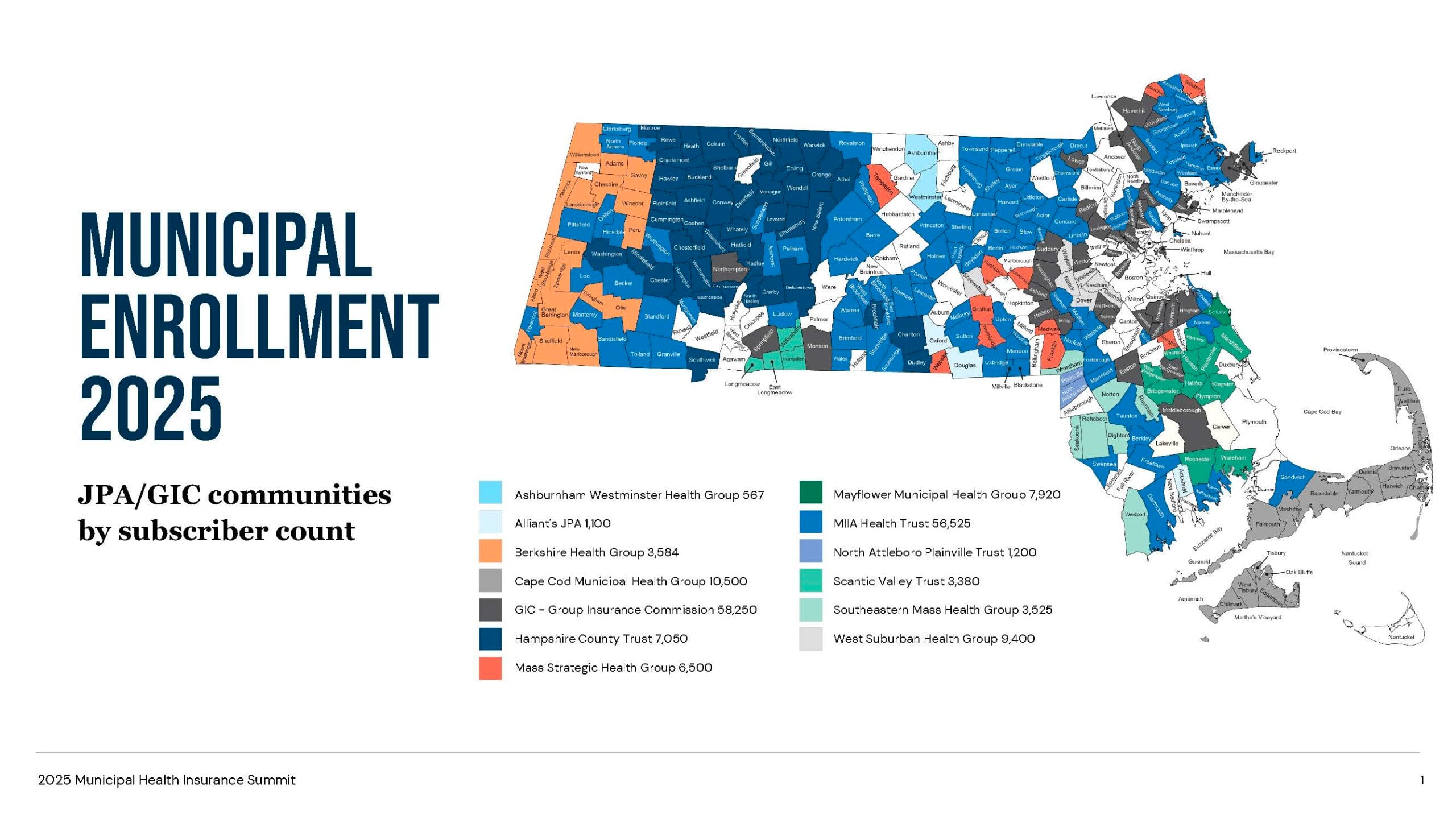
Eleven municipal entities chose in December to enroll in state Group Insurance Commission coverage this plan year — the largest number since 2011 — including some school districts.
“I would say I’m not super surprised at that, given the pressures that municipal and other budgets are facing when it comes to health care costs,” GIC Executive Director Matt Veno said in December.
Gov. Maura Healey’s fiscal year 2027 budget allows 2.7% growth in health care spending this year — which is lower than the overall spending growth in the budget, of 3.8% — but is still “far and away” the largest area of new spending, according to Massachusetts Taxpayer Foundation President Doug Howgate.
“This comes at no shock to you folks, given the school districts you work in and represent, health care costs are growing at a very rapid clip,” Howgate said at Monday’s MASC event. “And health care costs are big. And so even when you are able to constrain those costs… it’s going to be the biggest part of our budget.”
Healey has turned to a working group for possible solutions and in January said health care fixes will require “give on everyone’s part.”
Sam Drysdale is a reporter for State House News Service and State Affairs Pro Massachusetts. Reach her at sdrysdale@statehousenews.com. Click here for the original article.