



Alison Kuznitz, State House News Service
STATE HOUSE, BOSTON, July 22, 2026….Nearly 700,000 Bay Staters will still see double-digit premium increases next year, even after state insurance regulators managed to trim down rates across seven carriers and rejected the sharpest proposed spike of almost 26%.
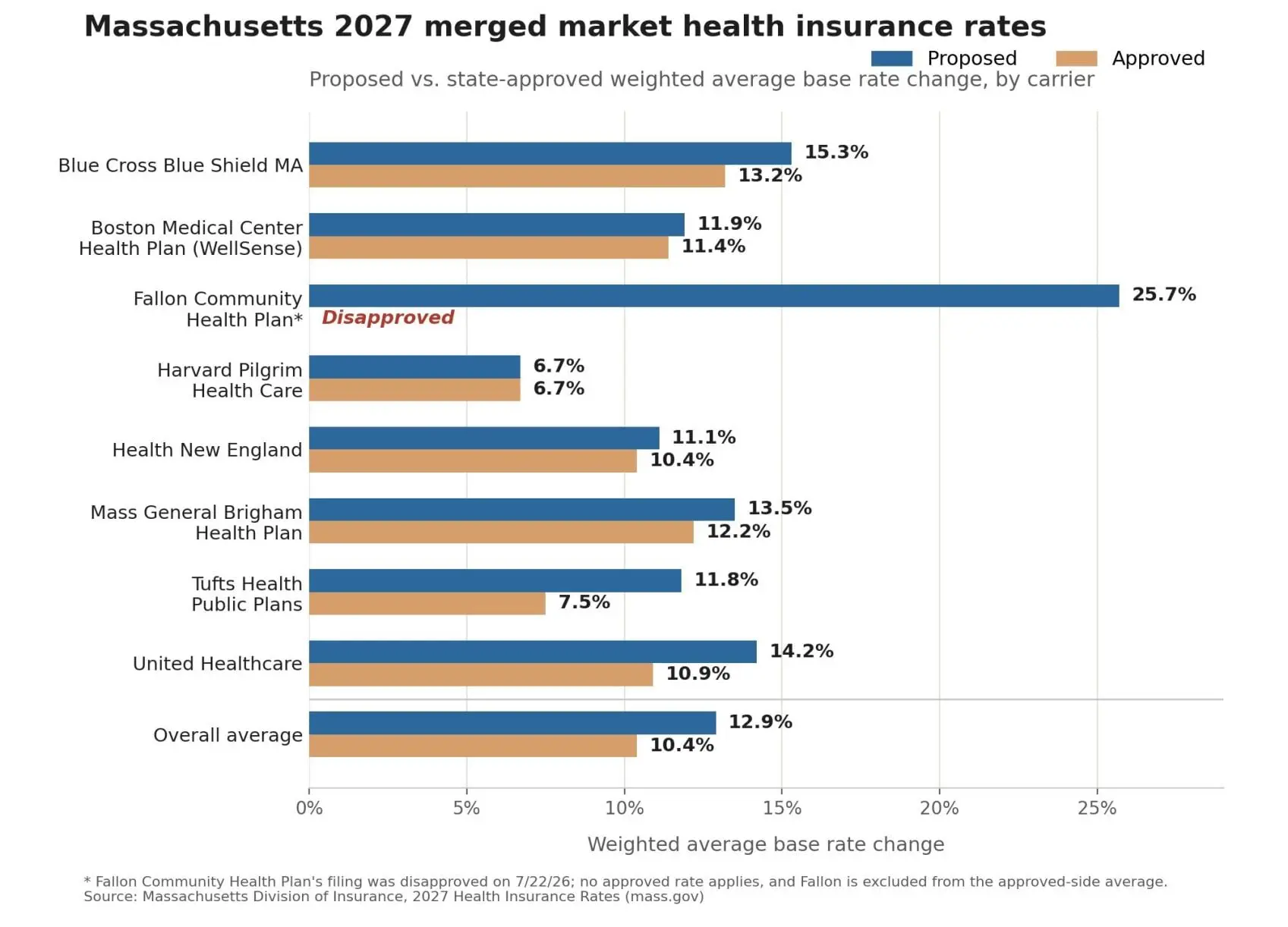
The Division of Insurance posted finalized rates Wednesday for the merged market, where many individuals and small businesses get coverage, that translate into an average premium jump of 10.4%. In May, insurers unveiled proposed rates that would have led to an average increase of 12.9%.
Insurance regulators rejected Fallon Community Health Plan’s proposed 25.7% increase, deeming it “excessive,” Gov. Maura Healey’s office said. The insurer can now choose to pursue an administrative appeal process. The plan has 29,641 enrollees.
Fallon Health spokesperson Melissa Randall said the insurer respects the the division’s decision and looks forward to “continuing our discussions with them as the review process moves forward.”
“As a not-for-profit community health plan, Fallon Health has worked to limit premium increases, filing the lowest average premium increases for its Health Connector product in the market from 2024 through 2026,” Randall said. “Consistent with our mission, we remain focused on balancing affordability and long-term sustainability so we can continue serving our members and supporting the communities that depend on us.”
Healey said the division’s negotiation efforts will save residents and businesses roughly $72 million in planned premium increases in 2027.
“Massachusetts residents and businesses are already struggling with the high cost of health care,” the governor said. “Nobody can afford massive increases in their health insurance premiums on top of that.”
But the double-digit premium increases underscore the ongoing healthcare affordability crisis, with residents increasingly unable to afford care that’s exacerbated by high deductible health plans. Healey’s prized Health Care Affordability Work Group has yet to publish recommendations that were expected last month.
Jon Hurst, president of the Retailers Association of Massachusetts, said the approved rates are “very disappointing.” The average family plan will now have total premiums that top $50,000, he said.
“It’s unaffordable,” Hurst said. “I mean, we continue to have looked the other way on what’s happening to real premium payers in Massachusetts.”
Blue Cross Blue Shield, which has the biggest enrollment at 166,384 members, was approved at a 13.2% rate increase. The insurer had proposed a 15.3% increase.
The state approved a 7.5% rate increase for Tufts Health, which has the second largest enrollment at 160,566 members. Tufts sought an 11.8% increase.
Harvard Pilgrim Health Care members will see the smallest premium increase of 6.7%, which the insurer proposed and the state didn’t negotiate down.
The approved rates exceed the state cost growth benchmark of 3.6%, a mechanism that has failed to meaningfully rein in spending.
At a hearing last month, insurers attributed escalating cost pressures to skyrocketing pharmaceutical costs driven by specialty drugs, plus steep provider reimbursement rates. Mass General Brigham Health Plan said it logged 17 claims last year that topped $1 million.
“Improving health care affordability for Massachusetts families and employers will ultimately require addressing the underlying drivers of health care costs across the entire health care system,” Lora Pellegrini, CEO of the Massachusetts Association of Health Plans, said Wednesday.
Pellegrini, a member of the governor’s healthcare affordability group, said she looks forward to recommendations and “meaningful action to address cost drivers in our marketplace and to provide health plans with needed tools to bend the health care cost trend for the customers we serve.”
Hurst said double-digit premium increases will force more small businesses to shut down.
“Whether the employee is paying $50,000 a year, or the employer. or they’re sharing it, that is unaffordable. It’s anti-competitive, and it’s shocking that Beacon Hill just doesn’t seem to get it,” Hurst said.
He added, “A lot of real premium payers, a lot of taxpayers, a lot of small businesses are really at the end of the rope.”
Alison Kuznitz is a reporter for State House News Service and State Affairs Pro Massachusetts. Reach her at akuznitz@stateaffairs.com.